



Who do you invite to the welcome party at a destination wedding?
Everyone who is invited to the wedding should be invited to the welcome party, and if the budget forces a cut, keep every guest who travelled. The rehearsal dinner is the event with the short list.
Invite everyone who is coming to the wedding. The Knot treats the welcome party as the event that is open to all guests, which is the main difference from a rehearsal dinner, and a planner quoted in Vogue says local guests should be invited too. If money forces a smaller list, The Knot says to keep at least the people who travelled, which at a destination wedding is nearly everyone.
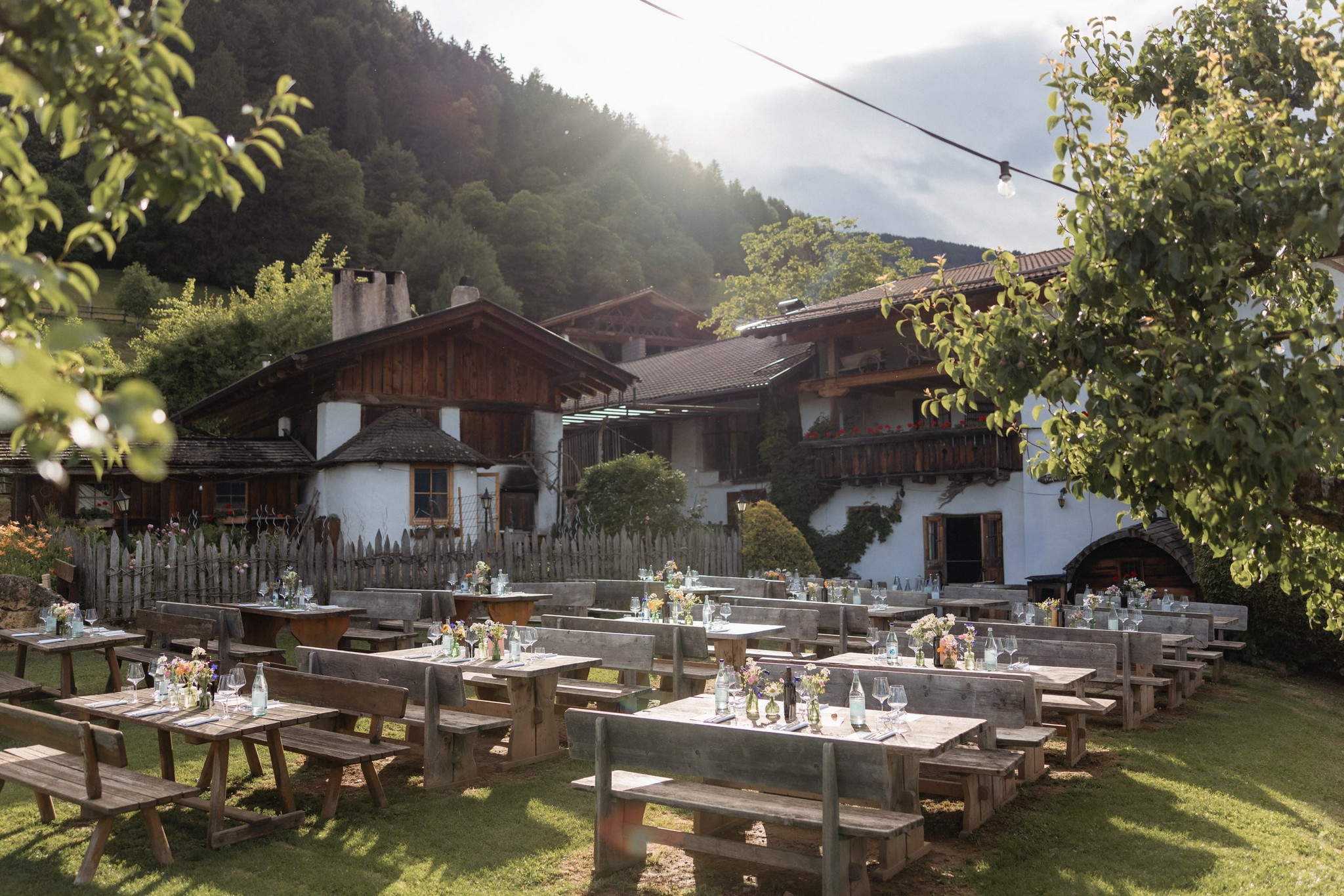
In this guide
At a glance
- Usual guest list
- Every wedding guest
- Smallest sensible list
- Everyone who travelled
- Typical length
- 2 to 3 hours
- Cost, US average (The Knot)
- About $3,000, up to $5,000
Who should be invited to a welcome party?
Every guest who is coming to the wedding should be invited, and that matters most at a destination wedding. The Knot’s guide to welcome parties says all wedding guests belong on the list, and its planners add that at a destination wedding guests arrive from everywhere and are glad of a casual place to eat and relax after the trip.
Paperlust, a stationery company, gives the same rule from the other direction. Its minimum is every out-of-town guest, and for a destination wedding of any size it suggests inviting everyone, since everyone travelled.
Local guests are where people disagree. A planner quoted in Vogue says that people who assume locals need no invitation are mistaken: locals do not have to say yes, but they should be invited, because the party is where friend groups and families meet before the wedding.
Couples on Reddit are less settled. In one r/weddingplanning thread, several replies said a welcome party now means anyone invited to the wedding, while another reply said that leaving out some travelling guests would bother them as a guest. In another thread, a couple with a mostly local family chose a family-and-wedding-party welcome party, and a reply said it was not particularly rude to leave out-of-town guests off a family-only list. These are individual opinions, not a survey.
How is the welcome party different from the rehearsal dinner?
The welcome party is open to all guests, while the rehearsal dinner is usually for family and the people taking part in the ceremony. That split is the reason most couples can treat the two lists separately.
| Welcome party | Rehearsal dinner | |
|---|---|---|
| Usual guests | All wedding guests | Family and the wedding party |
| Usual tone | More informal; a cocktail party with casual seating is one example | Sometimes an intimate sit-down meal |
| Usual timing | The day before the wedding, occasionally two days before (The Knot) | Can fall on the same day as the welcome party (Vogue) |
Vogue’s advice on order follows the guest lists. If everyone attends both, many couples hold the welcome party first and the rehearsal dinner second. If only a few people are invited to the rehearsal dinner, Vogue suggests holding that one first, so guests invited to only one event do not need an extra night. If both fall on one evening, keep them in separate rooms so arriving welcome-party guests do not walk in on the dinner.
What if you cannot afford to invite everyone?
Keep at least the guests who travelled; that is The Knot’s advice when the list has to be cut for budget. At a destination wedding that rarely saves much, so the savings usually come from the event itself.
The Knot puts an average rehearsal dinner at just under $3,000 and says to expect about the same for a welcome party, or closer to $5,000 for a lavish spread or a larger guest count. That is a published US average in dollars, not a quote for any destination. One couple in r/WedditNYC set the choice out as inviting everyone, which they said would cost a small fortune on top of the wedding, or inviting only out-of-town guests.
- Serve drinks and light food instead of a seated dinner.
- Give it an end time. Vogue’s planner says a welcome party should always have one, so guests sleep before the wedding.
- Keep it to two or three hours, the length The Knot suggests.
- Settle who pays early. The Knot’s planners say the couple can pay, but often the parents split the cost, or the side not paying for the wedding covers this event.
If you would rather have a small dinner for your closest circle, Paperlust says to word the invitation so it is clearly an intimate gathering, and to host separate welcome drinks for everyone else who travelled.
How do you invite people and count who is coming?
Send an insert card with the wedding invitation, or put the event on your wedding website with its own reply question. The Knot suggests both, and Paperlust recommends paper for a destination wedding, put only in the envelopes of guests who are invited. Paperlust says the card should give the host name, date, time, venue and dress code, and say whether food and drink are provided.
A separate reply for the welcome party gives you a real count for the caterer. On an Aisle wedding website guests can RSVP per event, so the welcome party has its own number: see wedding website RSVPs. If replies are slow, what to do when guests don’t RSVP covers the follow-up, and plus-one etiquette covers who counts as a guest at each event.
For the rest of the weekend, see how many events a destination wedding should have and what a three-day itinerary looks like.