



Destination wedding weather: how to plan for rain, storms and heat.
In this guide
Weather worries at a destination wedding are manageable with the right month, the right venue and a real backup plan. Here is how to plan around them.
Why Destination Wedding Weather Deserves Real Planning
Every couple checks the forecast, but at a destination wedding the stakes are different. Your guests have booked flights and rooms months ahead, you cannot pop over to the venue for a second look, and a change of plan means working through a coordinator and vendors in another time zone. That is why weather planning for a destination wedding starts at the very beginning of your search, not in the final week.
The good news is that weather is the most predictable risk you will face. Seasonal patterns are well documented, most established venues have rain protocols, and a handful of decisions made early will remove most of the stress. The goal is not to guarantee perfect skies, because nobody can. The goal is a wedding that still feels beautiful if the sky does something unexpected.
Learn the Seasons Before You Choose a Date
Start with the climate calendar of your destination, not the date you have in your head. Many of the world's most popular wedding destinations have a wet, stormy or very hot stretch, and it often overlaps with the months couples fall for because prices are lower.
Two patterns matter most for couples looking at beach and island weddings. The first is hurricane and tropical storm season, which affects the Caribbean, the Atlantic coast of Mexico, Florida and much of the Gulf. The second is the monsoon, which shapes weddings across Southeast Asia, Sri Lanka, Bali and parts of the Indian Ocean. Mediterranean destinations have a different challenge, which is summer heat, along with late-autumn rain. Mountain destinations bring sudden afternoon storms and cold evenings, even in summer.
Look at average rainfall by month, average high temperatures and, for coastal spots, sea conditions. Then ask your venue for its honest view of the riskiest weeks. A good coordinator will tell you.
Hurricane Season: What Couples Need to Know
The Atlantic hurricane season runs from June 1 to November 30. According to the National Hurricane Center, that window was chosen because it covers about 97 percent of Atlantic tropical storms and hurricanes. The official peak falls around September 10, and the busiest stretch is generally mid-August to mid-October.
For a Caribbean or Atlantic Mexico wedding, that makes September the highest-risk month, with the weeks on either side of it close behind. June and November see far less activity, although tropical storms can still form at the edges of the season. The first half of October stays active, and risk eases in its last two weeks. December through May sits outside the season entirely, and January through April is the most reliable stretch.
Geography matters too. In Mexico, the Caribbean coast around Cancun and the Riviera Maya sees more direct Atlantic storm activity, while Pacific destinations such as Los Cabos and Puerto Vallarta are more affected by Eastern Pacific systems, which often stay offshore. If you love a particular island but want a September date, compare how exposed it is. Destinations that sit toward the southern edge of the Caribbean, such as Aruba, have a reputation for being outside the usual storm track, but no date inside the season is risk-free, so read the current guidance from your venue and the National Hurricane Center.
If you choose a hurricane-season date for budget reasons, go in with eyes open. Ask the resort what happens if a named storm forces a cancellation or relocation, whether deposits are refundable or transferable, and how they handle guests who cannot travel.
Monsoon Season in Asia and the Indian Ocean
Monsoon does not mean constant rain. In many places it means warm, lush weather with heavy showers that may arrive on and off through the day. But it also brings rougher seas, occasional flight disruption and less predictable timing, which matters a lot for an outdoor ceremony.
Phuket is a useful example. The drier season runs from November to March, with calmer seas and the highest demand for venues, and the southwest monsoon runs from May to October. January and February generally offer the best odds of a dry day, and late February and early March balance dry conditions with a little more flexibility on dates. September sits near the monsoon's peak, October can still be very wet, and early November is mixed, while late November is usually more dependable. As one Phuket venue puts it, no month can guarantee a completely dry wedding day, so every outdoor plan needs a covered alternative.
The same logic applies in Bali, where the dry season runs roughly from April to October and the wetter months fall between roughly November and March, and in Sri Lanka, where the southwest and northeast coasts have opposite rainy seasons. Always check which coast your venue sits on, not just the country.
Choose the Venue With Weather in Mind
The single best protection against bad weather is a venue that is designed for it. When you tour a venue, in person or by video, ask these questions:
Where exactly does the ceremony move if it rains, and how long does the switch take? A good answer is a covered terrace, a ballroom, a pavilion or a tent that is already on site.
Is the backup space truly comparable? A beautiful ocean view ceremony that moves to a windowless conference room is a different wedding. Ask to see photos of real weddings held in the backup space.
Who makes the call, and when? Many venues set a decision deadline, often the morning of the wedding or a day before, so find out the time and the person responsible.
Is there a cost to switch? Some resorts include the backup at no charge, while a private villa may need a tent rental that has to be booked in advance and can be expensive.
How does the venue handle wind, heat and humidity? These can ruin a day just as quickly as rain. Ask about shade, fans, misting systems and heating for cooler evenings.
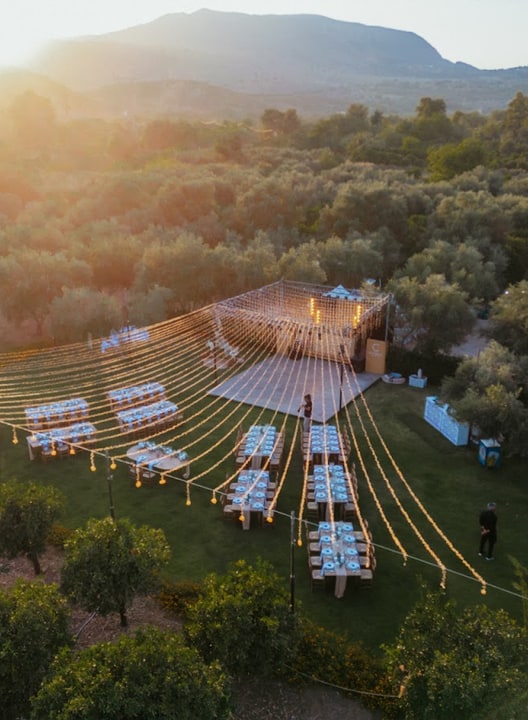
For private villas and estates in places such as Tuscany or Mallorca, a clear-span tent is often the answer. Price it at the start, because adding one in the final weeks is harder and more costly than building it into the plan.
Build a Real Plan B
A backup plan should be written down, not just talked about. Work with your coordinator to create a simple weather plan that covers the ceremony, cocktail hour, dinner and any outdoor photo locations.
Decide in advance what triggers each decision. For example, you might agree that if the forecast shows more than a set chance of rain in the two hours before the ceremony, you move indoors. Agreeing on the rule early means you are not making an emotional call with hair half done.
Plan the logistics of the move. Chairs, florals, sound equipment and the guest flow all need to shift, and your team needs time. Ask your coordinator how long the switch takes and what could be set up in both locations from the beginning, such as a floral arch that works indoors or out.
Tell your close family and the wedding party about the plan so they are not surprised, and add a short note on your wedding website so guests know what to expect. Aisle wedding websites make it easy to post updates and a weather FAQ in one place for every guest.
Pick a Time of Day That Works for You
Time of day changes weather risk more than most couples realise. In many tropical places, afternoon showers are common and often clear by evening, so a later ceremony slot, often around 4:00 to 5:00 PM at beach resorts, can improve your odds. It also brings cooler temperatures and softer light for photos.
In hot Mediterranean summers, an early evening ceremony protects guests from the worst midday heat, and in mountain destinations a morning ceremony may avoid afternoon thunderstorms. Ask your venue and photographer which times have worked best at that particular spot, and let the light and temperature guide your timeline as well as the schedule.
Protect Your Investment With Insurance
Insurance cannot change the weather, but it can limit the financial damage. There are two kinds to look at. Wedding event insurance is designed to cover non-refundable deposits and vendor losses if the event is cancelled or disrupted for covered reasons. Travel insurance is for you and your guests, and it can reimburse non-refundable trip costs if travel is cancelled or interrupted.
The most important rule is timing. Most policies that cover hurricane-related cancellations require you to buy before a storm is named, and a storm that already has a name is usually treated as a known event. So buy at the time of booking, not when the forecast turns. Read the policy for what counts as a covered reason, whether a mandatory evacuation or a flight cancellation is enough, how far in advance a claim must be made and whether the cause can be simply bad weather or must be a named storm.
Wedding insurance is not required for every wedding, but it deserves a serious look for any date within hurricane or monsoon season, especially when deposits are large and non-refundable. Also check what your venue and vendor contracts say about force majeure, which is the clause that decides what happens when something outside everyone's control forces a cancellation.
Help Your Guests Prepare
Your guests are travelling on your date, so give them the information they need. Share the seasonal conditions honestly, and suggest they buy travel insurance when they book, since most storm coverage only works if it is purchased before a named storm forms.
Encourage them to arrive a day or two early. Early arrival gives a buffer against delayed flights, and it makes the wedding much less stressful. In storm season it can be the difference between your friends being there and being stuck in a connecting airport.
Tell guests what to pack. Light layers, a compact umbrella or rain jacket, sunscreen and shoes that cope with wet grass or sand all help. For a beach wedding, a simple note about footwear and fabric is much appreciated. Our guide to what to wear to a destination wedding covers this in more detail.
Prepare for the Day Itself
On the wedding day, put one person in charge of the weather. That should be your coordinator, not you. Their job is to watch the forecast, talk to the venue and make the call at the agreed time.
Keep a small weather kit on hand: clear umbrellas that look good in photos, towels, spare shoes, a hair and makeup touch-up kit, and a few fans or blankets for guests depending on the climate. Brief your photographer and videographer too. Many say that moody skies and rain create some of their favourite images, and they can plan shots under cover.
Finally, decide now how you want to feel. Couples who tell their stories years later rarely talk about the rain itself. They talk about the people who stayed, the laughter under the tent and the moment the sun came out. A flexible mindset, supported by a proper plan, is the best weather protection you have.
A Simple Weather Checklist
Research the climate and storm calendar for your destination before you commit to a date.
Ask the venue about its backup space, decision deadline and any added cost.
Price a tent or covered alternative at the start if your venue is outdoors.
Choose a ceremony time that suits local weather patterns.
Buy wedding event and travel insurance at booking, well before any named storm.
Write a weather plan with your coordinator, including triggers and logistics.
Communicate the plan to guests through your wedding website.