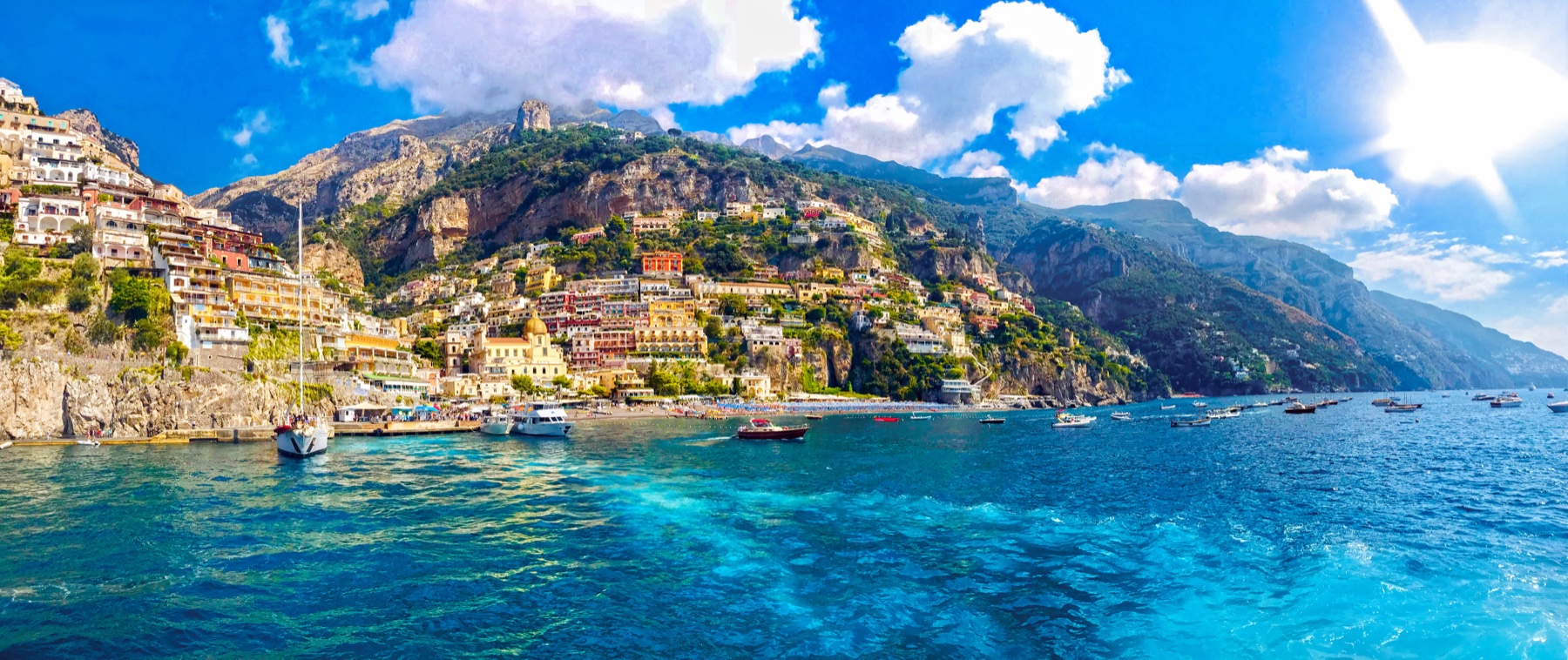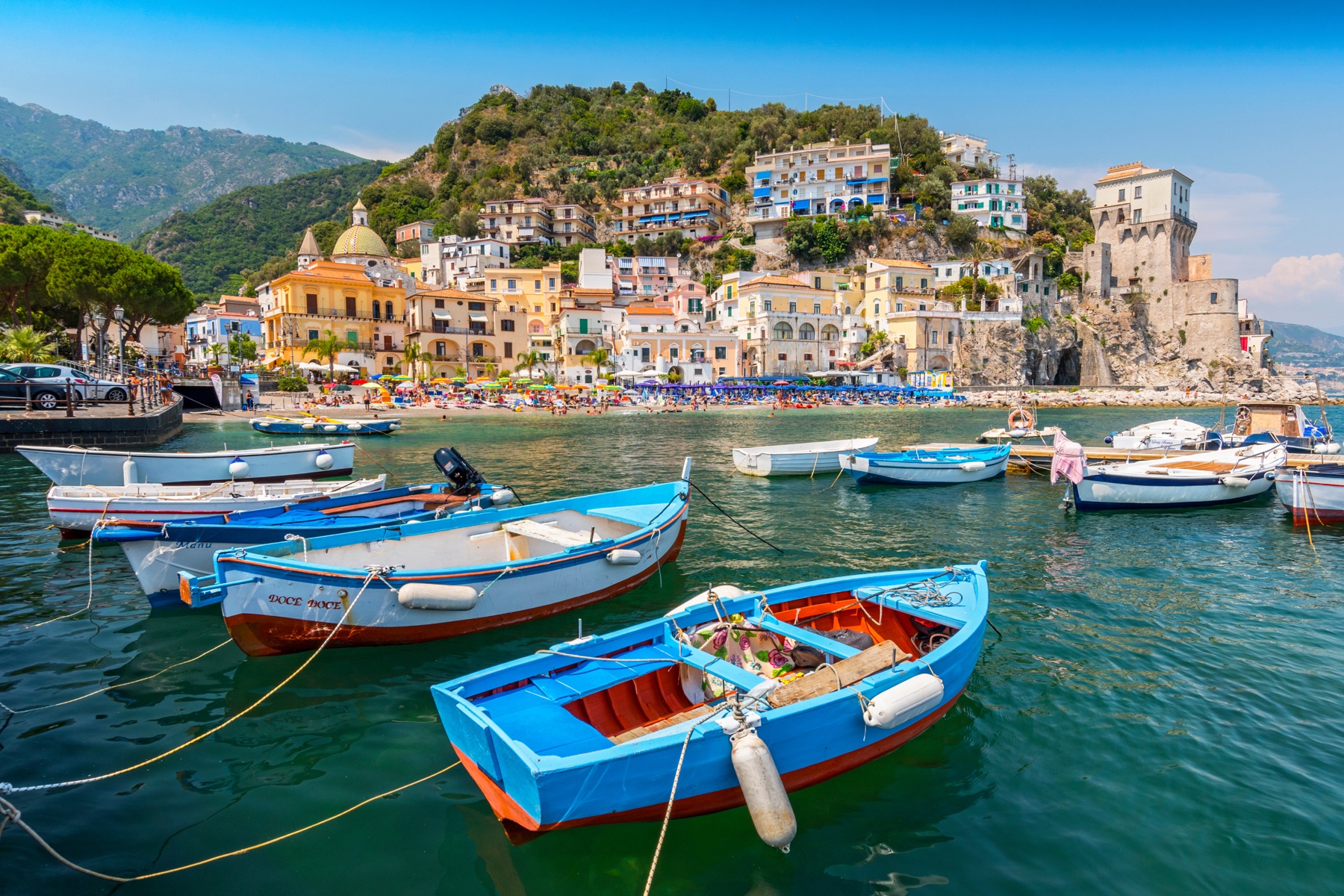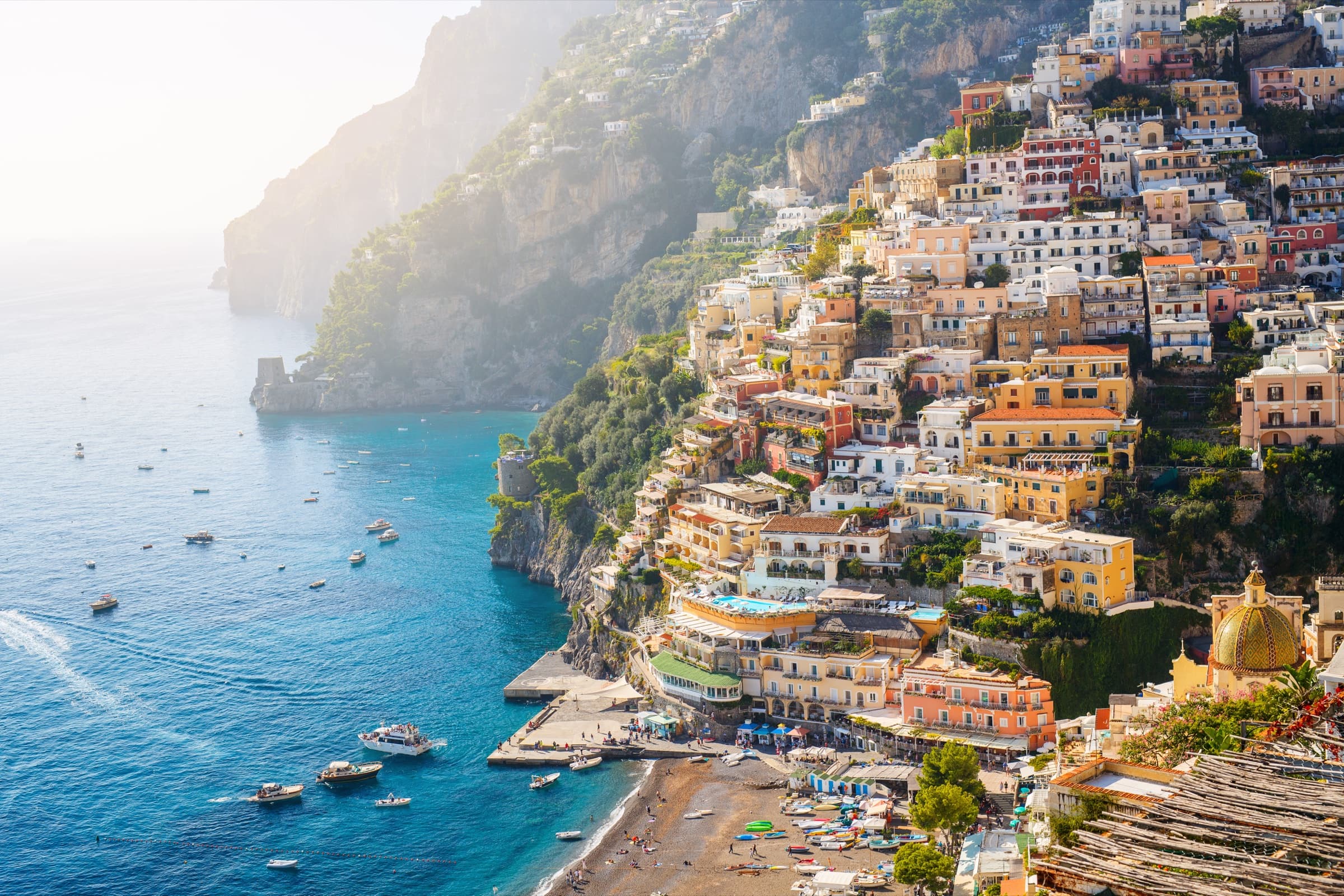
The Amalfi Coast does not reward the casual visitor. It is thirty miles of vertical limestone between Positano and Vietri sul Mare, the road carved by Mussolini's engineers into the cliff face, a handful of historic towns stacked up the hillside, and a shipping lane below that carries everything the villages cannot grow themselves. It is also, and this is harder to look past, one of the three or four most photographed wedding backdrops in Europe.
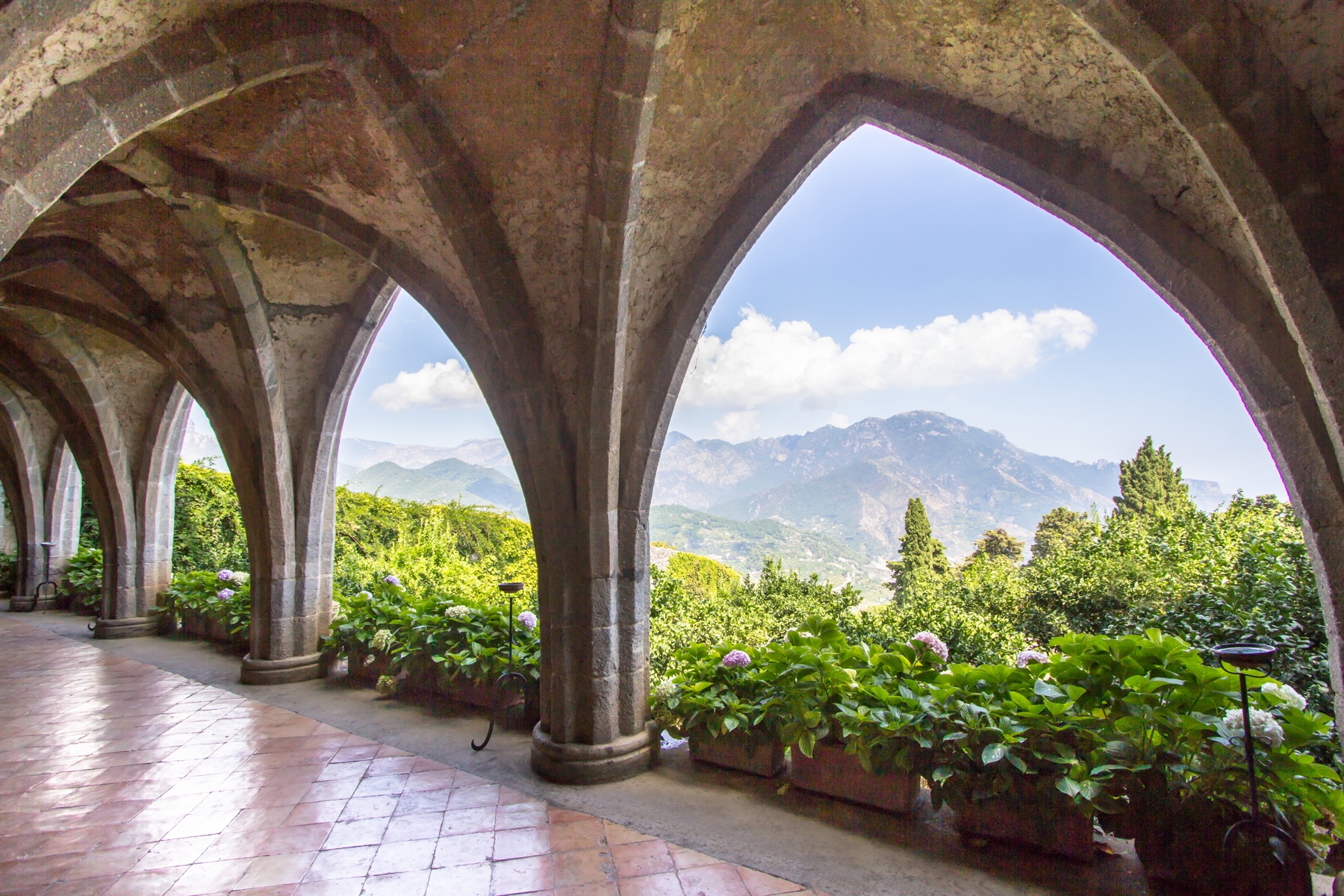
What you pay for in Amalfi is not luxury in the abstract. It is the dramatic scale of the coast, the ceremony terraces of Ravello (the Villa Cimbrone cloister, the Villa Rufolo gardens), the dinner rooms of Positano's cliffside hotels, and a supplier network that has spent decades learning how to move 80 to 120 guests between a clifftop ceremony and a beach-level reception without drama. None of that is cheap. A comparable weekend on Mallorca runs roughly thirty percent less; on the Algarve, closer to forty.
The coast divides into three sub-regions that behave differently: Ravello at altitude (1,000 feet up, cooler, the ceremony backdrop most couples picture), Positano at sea level (warmer, the photographs everyone knows, harder logistics), and Amalfi town itself (between the two, quieter, more historic). The rest of this guide assumes Ravello or Positano; we will say when it matters.