Spain Destination wedding guide
Spain is the fourth-most-booked European wedding destination for U.S. couples, after Italy, France, and Greece. Aisle covers two regions. Mallorca (Mediterranean island fincas and coastal estates) and Barcelona (urban + Costa Brava). Civil ceremonies legally recognized in the United States; the paperwork is moderate (residency requirement of 30 days for Mallorca / Catalonia varies).
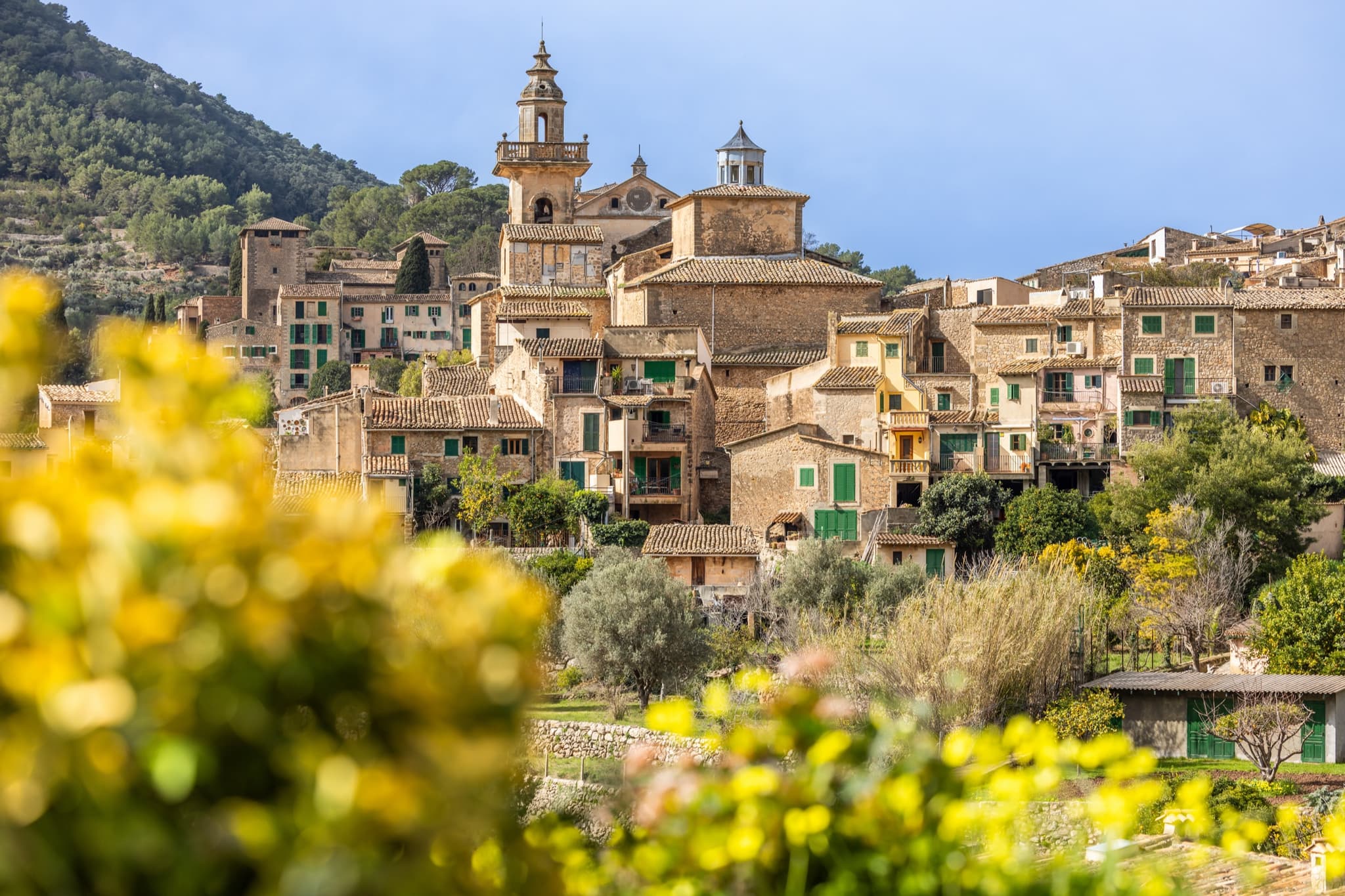
Spain rewards couples willing to look past the obvious. Most U.S. couples arriving in Spain head straight for Marbella or Ibiza; the better wedding markets are Mallorca and the coastline north of Barcelona, where the venue inventory is deeper, prices are lower, and the planner network is stronger. Spain's wedding industry is mature in the Balearics specifically, over a hundred restored fincas (rural estate-houses) host destination weddings annually.
Aisle's two Spanish regions are different products. Mallorca is fincas and Mediterranean coastline, restored 18th-century stone-house estates set inland from the Tramuntana mountains, plus a handful of cliffside villas on the south coast. Most weddings run 50–150 guests. Barcelona is urban + Costa Brava, a few hotels and rooftops in the city paired with coastal estates an hour north along the Mediterranean. Smaller market than Mallorca but easier guest travel.
Civil-ceremony paperwork is moderate. Mallorca requires 30 days of residency for at least one partner before the wedding date, which most couples handle by stretching the trip. Catalonia (where Barcelona sits) is similar. Couples who want to skip the residency requirement do a legal civil ceremony in their U.S. courthouse and a symbolic ceremony in Spain, common pattern.
Regions of Spain
Each region has its own logistics, costs, and best months. Open a region for the full guide.
Wedding costs in Spain
For 80 guests, Aisle’s model estimates a whole wedding in Spain at about US$68,000, with most landing between US$57,000 and US$79,000. That covers the venue, food and drink, a welcome dinner, the suppliers and any bedrooms a venue asks you to commit to. It leaves out flights, guests’ own rooms and attire. Use it to check a proposal, then replace it with written quotes.
- Modelled whole wedding · 80 guests
About US$68,000
Most land between US$57,000 and US$79,000. The four lines below add up to it, to the nearest thousand. This is an estimate across Spain, not a quote from any venue.
- Venue, food and drink
About US$18,700
What the venue charges to hold the wedding, plus food and drink on the day at about US$200 a guest with the bar, service and tax in. Most land between US$14,600 and US$22,800.
- Bedrooms to commit to
None, typically
Most venues in Spain ask for no room commitment. Where one does, guests usually pay it back.
- Welcome dinner
About US$6,300
Food and drink for 80 guests the night before.
- Suppliers
About US$42,800
A planner, photography and video, flowers and styling, music, guest transport, hair, makeup and stationery. Most land between US$32,700 and US$52,900.
Cost assumptions
- Model basis: October 8, 2026; 607 Spain venues with an estimate each; modelled figures, not recorded wedding bills, in US dollars at European Central Bank reference rates of that date.
- The modelled total leaves out flights and travel, guests’ own rooms where the venue requires none, attire, rings, gifts and a honeymoon. Ask suppliers to itemise taxes, service, overtime and any minimum spend.
When to get married in Spain
Mid-May through June and September into early October are peak wedding months in both Mallorca and Barcelona, warm, dry, lower crowds than July–August. July and August are peak tourism in the Balearics; book ~12–18 months out for popular fincas. April and late October are cooler but still workable for inland venues. Avoid November–March for outdoor ceremonies.
Legal requirements
A legal civil ceremony in Spain is recognized in the United States but requires 30 days of residency. Most U.S. couples opt for symbolic-in-Spain + legal-in-the-U.S. before traveling.
- A civil ceremony at a Spanish Registro Civil is legally recognized once translated and apostilled. Requires 30 days of residency for at least one partner before the date.
- A symbolic ceremony in Spain has no legal weight, couples handle the legal civil ceremony at a U.S. courthouse before travel. This is the most common path for U.S. destination weddings here.
- A Spanish-language translator must be present for civil ceremonies if either partner does not speak Spanish/Catalan. Planners arrange this.
- For short visits, U.S. citizens can generally stay in the Schengen area for up to 90 days in any 180-day period without a visa. As of September 2026, ETIAS is not yet operating. The EU expects it to start in the last quarter of 2026 with a €20 application fee, subject to exemptions. Check the official ETIAS website before travel.
- ETIAS. Official EU travel authorization guidance ↗Official EU guidance on the planned start, application fee, and exemptions. Checked September 2026.
- U.S. Embassy in Spain. Marriage in Spain ↗Official U.S. State Department guidance on Spanish civil ceremony residency requirements.
- Wikipedia. Marriage in Spain ↗Civil and Catholic ceremony framework, Mallorca / Catalonia residency rules.
Frequently asked questions
- Is a wedding in Spain legally recognized in the United States?
- A legal civil ceremony at a Spanish Registro Civil is recognized in the U.S. once translated and apostilled. The catch is the 30-day residency requirement before the ceremony date, most U.S. couples skip this by doing a quick legal civil ceremony at home and a symbolic ceremony in Spain.
- Mallorca vs Barcelona, which is better for a wedding?
- Mallorca is the deeper market, over a hundred restored fincas, mature planner network, Mediterranean coastline, 50–150-guest sweet spot. Barcelona is smaller but easier for guest travel, direct flights from major U.S. cities and a mix of urban and Costa Brava coastal venues. Aesthetically, Mallorca is rural-stone and rugged coastline; Barcelona is urban + Mediterranean north coast.
- How much does a wedding in Spain cost?
- For 80 guests, Aisle’s model estimates a whole wedding in Spain at about US$68,000, with most landing between US$57,000 and US$79,000. That covers the venue, food and drink, a welcome dinner, the suppliers and any bedrooms a venue asks you to commit to. It leaves out flights, guests’ own rooms and attire. It is a modelled estimate, not a booked-wedding average or a venue quote. Request a complete proposal for your guest count, dates and room plan.
- When should we get married in Spain?
- Mid-May through June and September into early October are peak shoulder months on both Mallorca and Barcelona, best weather, fewer tourists than July–August, lower prices. Book popular Mallorca fincas 12–18 months out for May/June/September dates.
- How do guests get to Mallorca from the U.S.?
- Most U.S. flights connect through Madrid (MAD) or Barcelona (BCN). From there, Palma de Mallorca (PMI) is a 60-minute flight or 8-hour ferry. In peak season, direct flights from London, Paris, and Amsterdam to PMI are common, a London or Paris layover often beats Madrid for connection time.
- Can we have a Catholic wedding ceremony in Spain?
- Yes. Spain recognizes Catholic ceremonies as legally binding when filed with the Registro Civil in advance. Most Mallorca and Costa Brava planners handle this paperwork. Non-Catholic religious ceremonies (Anglican, Jewish, Orthodox) require a separate civil signing, most U.S. couples skip the in-Spain civil signing entirely.
Aisle works inside Claude and ChatGPT
Ask for venues in Spain by guest count and budget.
Start wherever you are in your plans.
Find a venue or bring the one you’ve booked. Build your wedding website, collect RSVPs and organise rooms for your guests.